Upgrades · ten jobs · BER file 8 Sep 2026 · SEAI median costs H1 2026
A heat pump moves a BER nine times as far as new windows
In the typical home where each job applies, a heat pump moves the rating 93 points on the scale (our model, BER file of 26 Sep 2026). Solar panels come next, then wall insulation. New windows move it 10 points, and attic insulation 6. They still matter: they cut the heat a heat pump has to replace.

Bungalows in Hull, England, being wrapped in outside insulation. The walls get thicker; the rooms stay as they are.
Garrick Close, Kingston upon Hull: bungalow renovations, September 2023 · Hullian111 · CC BY-SA 4.0
Which of these jobs first, for your house?
See the grants and what you’d pay.
About 10 seconds. See your numbers first, then get quotes if you want them.
93
Points on the BER scale a heat pump adds, for the typical home
kWh/m²/yr · research lane, BER file 26 Sep 2026
Our model9 in 10
Homes sold or let with an attic short of the grant standard
10.3% at U ≤ 0.16 · BER file 26 Sep 2026
BER assessment89.6%
Homes sold or let with older windows
U > 2.0 · BER file 26 Sep 2026
BER assessment46.6%
Homes sold or let already under the heat pump line
HLI ≤ 2.3 · BER file 8 Sep 2026 · n=161,297
BER assessmentUpdated · grants checked · BER file · prices SEAI H1 2026 · How we know · Corrections
Where this sits · the heat chain
This page covers all four links. Fix the fabric first, then the air, then the heat. Every job below sits on one of them.
- Fabricwalls, roof, floor, windows
- Airdraughts and ventilation
- Heatheat pump or boiler, radiators, controls
- Usebills, comfort, the BER
- The idea behind itFollow the heat
- You are hereUpgrades
- Next questionHow do you get a house like yours to a B?
The walls lose more heat than the roof and floor together
Where a typical semi-detached house built 1971–80 loses its heat, with the ten jobs pinned where they act. BER assessment
A third of the heat a semi-detached house built 1971–80 loses goes through its walls
Walls 32%, windows 18%, air 17%, floor 11%, roof 10%, junctions 10%, doors 2%.
A section through a semi-detached house built 1971–80, front to back. Each arrow's width is that element's share of the heat the house loses for every degree it is warmer inside than out, from the insulation values and areas on 4,498 BER certificates for homes sold or let, assessed 2022–26. The median wall lets through 1.10 watts per square metre per degree, the roof 0.40 and the windows 2.80; the median heat loss indicator is 3.15, over the heat pump line of 2.3. Air (draughts, vents and open chimneys) isn't measured on a BER: it is what's left once the six measured elements are subtracted, so it carries the most uncertainty. The numbered pins show where each of the ten jobs acts, in the order they're usually done.
EstimateAir is estimated as the remainder (heat loss indicator × floor area, less walls, roof, floor, windows, doors and thermal bridging). Shares are rounded to sum to 100.
Sources: SEAI BER Research Tool, 8 Sep 2026 · Certificates for a sale or private letting assessed 2022–26 with a heat loss indicator: semi-detached house built 1971–80, 4,498 certificates
The numbers
| Element | Share of heat loss | Median |
|---|---|---|
| Walls | 32.0% | 1.10 W per m² per degree, 89 m² |
| Windows | 17.6% | 2.80 W per m² per degree, 21 m² |
| Air (estimated) | 16.8% | the remainder |
| Floor | 10.7% | 0.64 W per m² per degree, 60 m² |
| Roof | 10.5% | 0.40 W per m² per degree, 61 m² |
| Junctions | 10.2% | cold bridges at joins |
| Doors | 2.2% | 2.95 W per m² per degree, 2 m² |

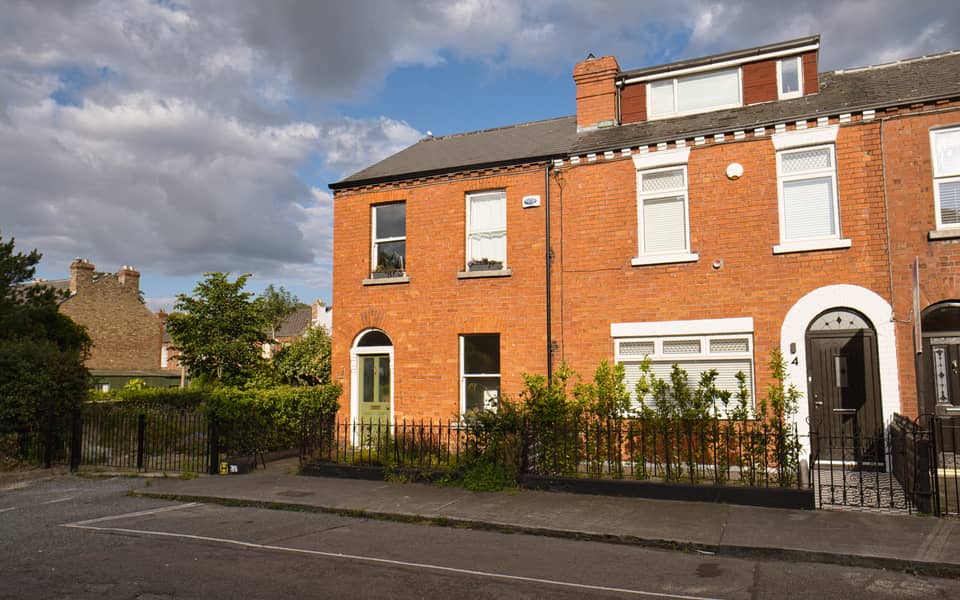
Pebble-dash semis in Blackrock, Co. Louth. Figure 1 cuts through a typical semi-detached house built in the 1970s.
Houses in St Fursey's Terrace, Blackrock · Eric Jones · CC BY-SA 2.0
The ten jobs, link by link
Each job with what SEAI's grant pays against SEAI's typical price for a semi-detached house, and the one number to know. Fabric first: that's the usual order. SEAI rule
01Fabric
Most heat leaves through the walls, roof, floor and windows. Fix these first and the heating has less to replace. Five jobs, usually done first.
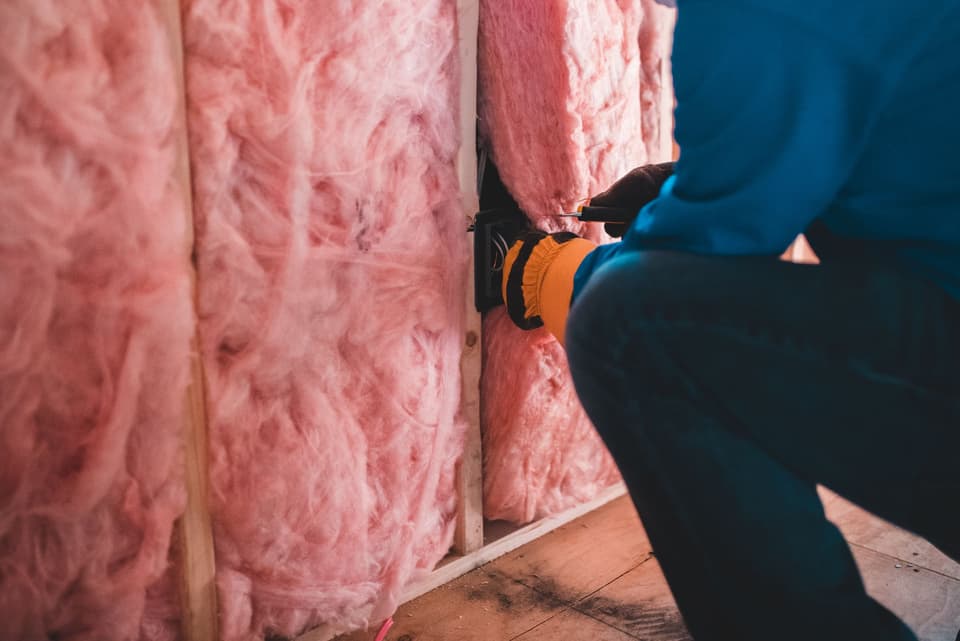
Unrecognizable worker insulating with stone wool · Erik Mclean · Pexels License
Fabric · the roof
Attic insulation
Attic insulation is a thick layer laid over the ceilings of the top rooms. Heat you paid for stays in the rooms instead of rising into a cold roof.
€1,500 of €2,10171%Grant read 7 Sep 2026 · typical price SEAI H1 2026, semi-detached
9 in 10homes sold or let have an attic short of the grant standard10.3% at U ≤ 0.16 · BER file 26 Sep 2026
BER assessment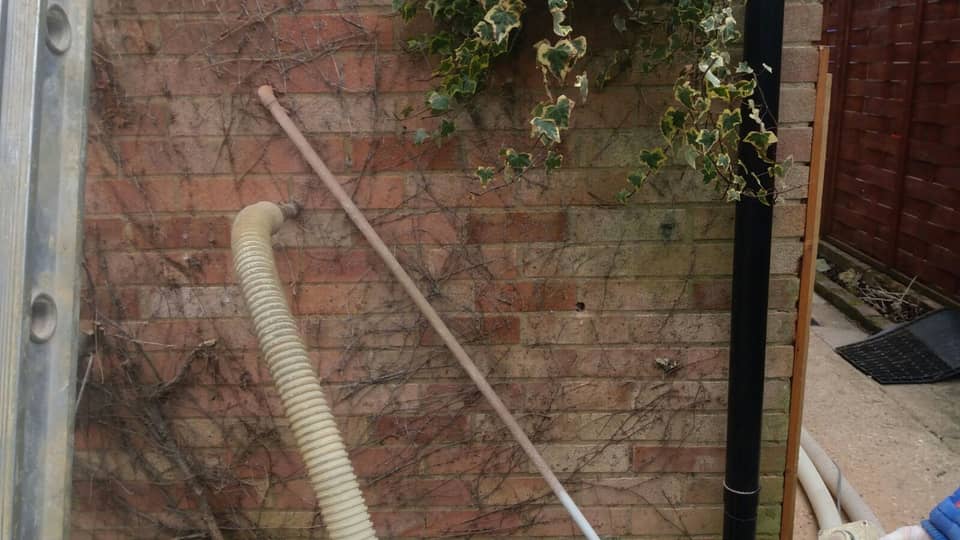
Fabric · the walls
Cavity wall insulation
Most Irish estate houses have two skins of block with a gap in between. Cavity insulation fills that gap with beads or wool, blown in through small holes drilled from outside.
€1,300 of €1,58582%Grant read 7 Sep 2026 · typical price SEAI H1 2026, semi-detached
12%of homes sold or let with a known wall type still have an empty cavity168,097 certificates with the wall type · BER file 26 Sep 2026
BER assessment
Semi-detached cottage in Geashill, County Offaly · A.-K. D. · CC0 1.0 (public domain dedication)
Fabric · the walls
Internal wall insulation
Internal wall insulation is insulated board fixed to the inside of every outside wall, then plastered and painted. The house looks the same from the road and warms up faster inside.
€3,500 of €9,84336%Grant read 7 Sep 2026 · typical price SEAI H1 2026, semi-detached
22%of homes sold or let with a known wall type have solid stone or brick walls168,097 certificates with the wall type · BER file 26 Sep 2026
BER assessment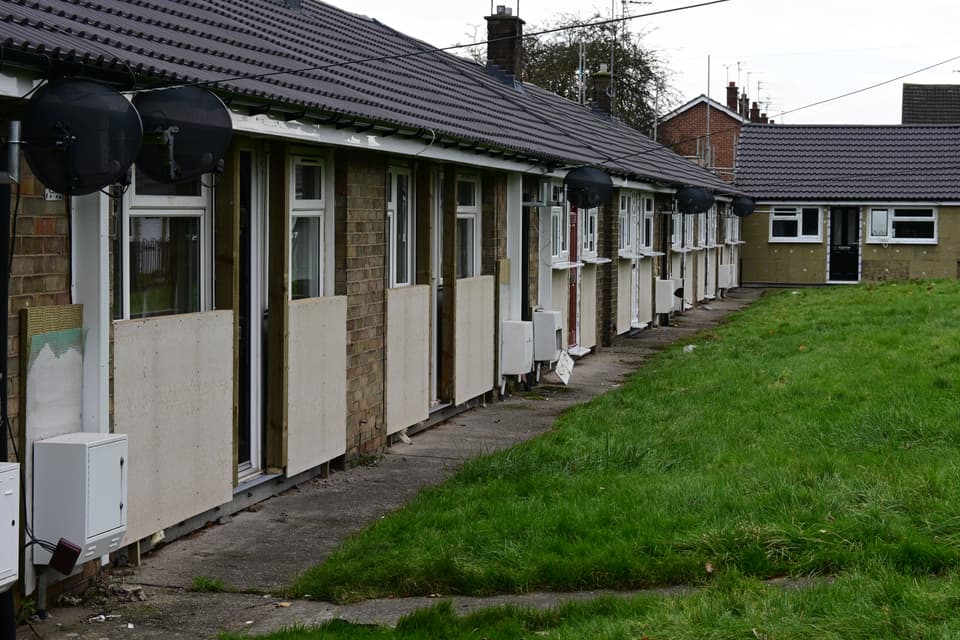
Garrick Close, Kingston upon Hull: bungalow renovations, November 2023 · Hullian111 · CC BY-SA 4.0
Fabric · the walls
External wall insulation
External wall insulation is rigid board fixed to the outside of the house and covered in render. The walls get thicker, the house changes colour, and nothing inside is touched.
€6,000 of €23,21926%Grant read 7 Sep 2026 · typical price SEAI H1 2026, semi-detached
What external wall insulation costs32%of the heat a semi-detached house built 1971–80 loses goes out through its wallsBER file 8 Sep 2026 · n=4,498
BER assessment
Unrecognizable workman installing window in house during renovation process · Ksenia Chernaya · Pexels License
Fabric · windows and doors
Windows and doors
New windows stop the draught and the cold pane at the sill. They are also the upgrade people want first and the one SEAI fund last.
€3,000 of €7,11042%Grant read 7 Sep 2026 · typical price SEAI H1 2026, semi-detached
89.6%of homes sold or let still have older windowsU > 2.0 · BER file 26 Sep 2026
BER assessment


02Air
Sealing draughts keeps heat in. A tighter house then needs planned fresh air to stay dry. No individual grant of its own.
Air · no pin: no individual grant
Draughts and ventilation
There's no individual grant for air on its own. Through a One Stop Shop, SEAI pays €1,000 for air-tightness work and €1,500 for mechanical ventilation.
SEAI One Stop Shop grants · read 8 Oct 2026 SEAI rule
17%of a semi-detached house built 1971–80's heat leaks out as air: our estimate, since a BER doesn't measure itThe remainder · BER file 8 Sep 2026
Our model

03Heat
The heating only puts back what the house loses. A heat pump works best when the house loses less. Four jobs.
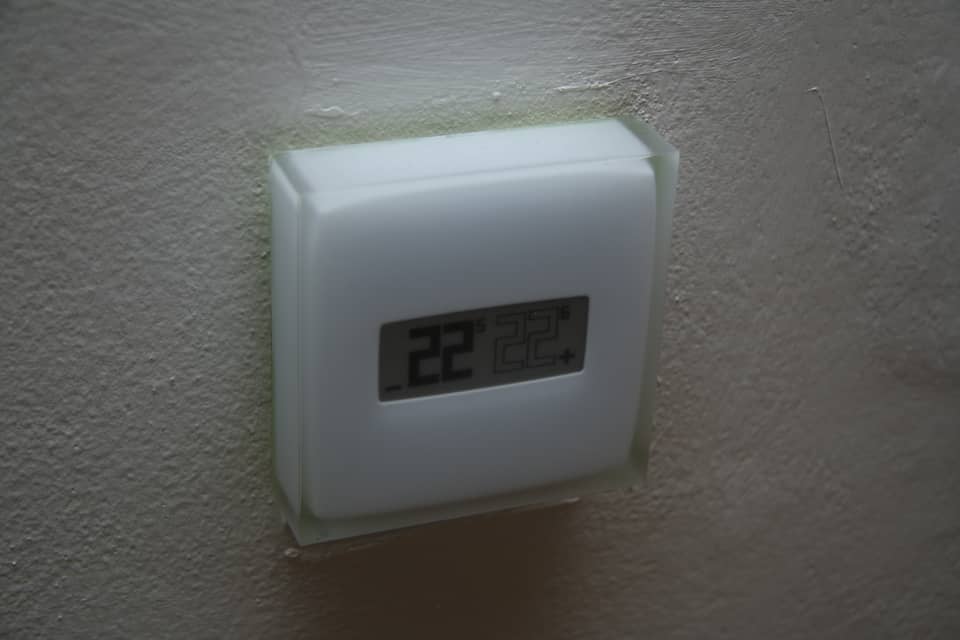
Overview of Netatmo Thermostat in Michle, Prague · Jiří Sedláček · CC BY-SA 4.0
Heat · the controls
Heating controls
Heating controls are the timer, the thermostats and the valves. They decide when the heating runs and which rooms get it, and they save money by not heating an empty house.
€700 of €3,00023%Grant read 7 Sep 2026 · typical price SEAI H1 2026, semi-detached
€700the grant, the same for every type of homeSEAI heating controls · read 7 Sep 2026
SEAI rule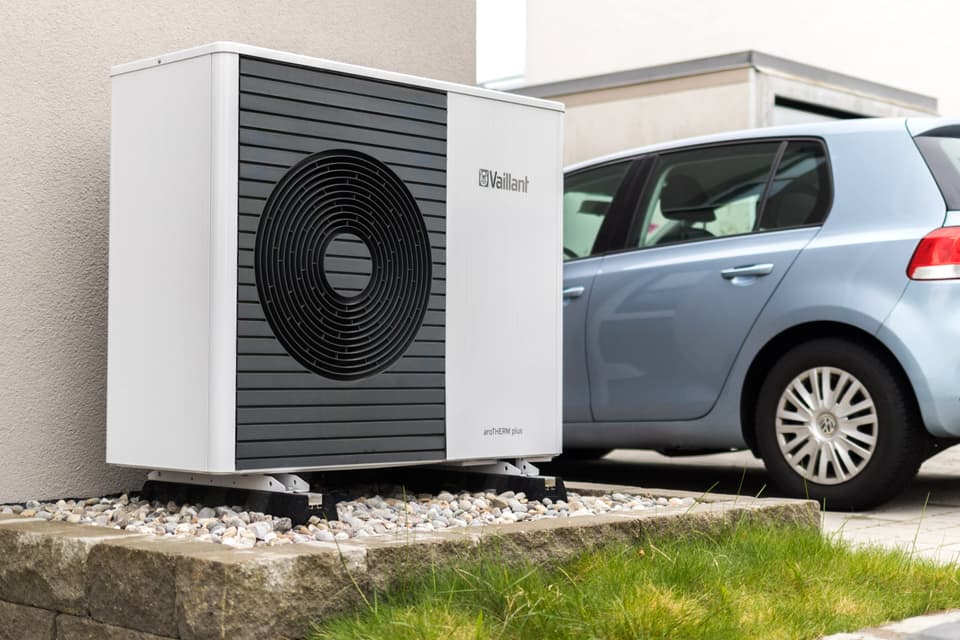
Wärmepumpe Außeneinheit (air-to-water heat pump outdoor unit) · Mueller felix · CC BY-SA 4.0
Heat · the heating
Heat pump
A heat pump is a box outside the house. It takes heat out of the open air and moves it into your radiators and your hot water.
€14,500 of €16,74187%Grant read 3 Oct 2026 · typical price SEAI H1 2026, semi-detached · hatched: the €2,000 scrappage part
What a heat pump costs to put in93points on the BER scale for the typical home: the most of any one jobkWh/m²/yr · research lane, BER file 26 Sep 2026
Our model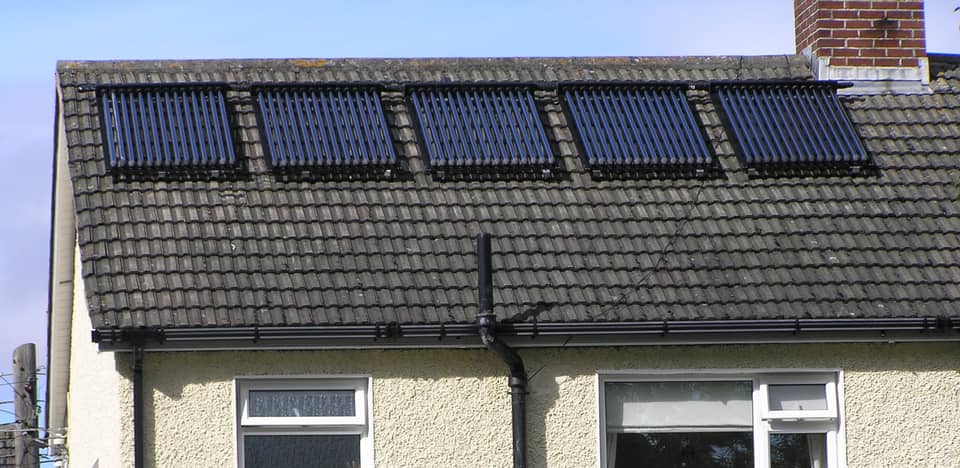
Solar Hot Water Panels On Suburban House Roof South Dublin Sep2012 · Terence wiki · CC BY-SA 3.0
Heat · hot water
Solar hot water
Solar hot water collectors heat water directly. They are plumbed into the cylinder, not wired into the fuse board, and they cover about half a year's hot water.
Grant €1,200. SEAI publishes no typical price for this job.
SEAI solar water heating
€1,200the grant, the same for every type of homeSEAI solar water heating · read 3 Oct 2026
SEAI rule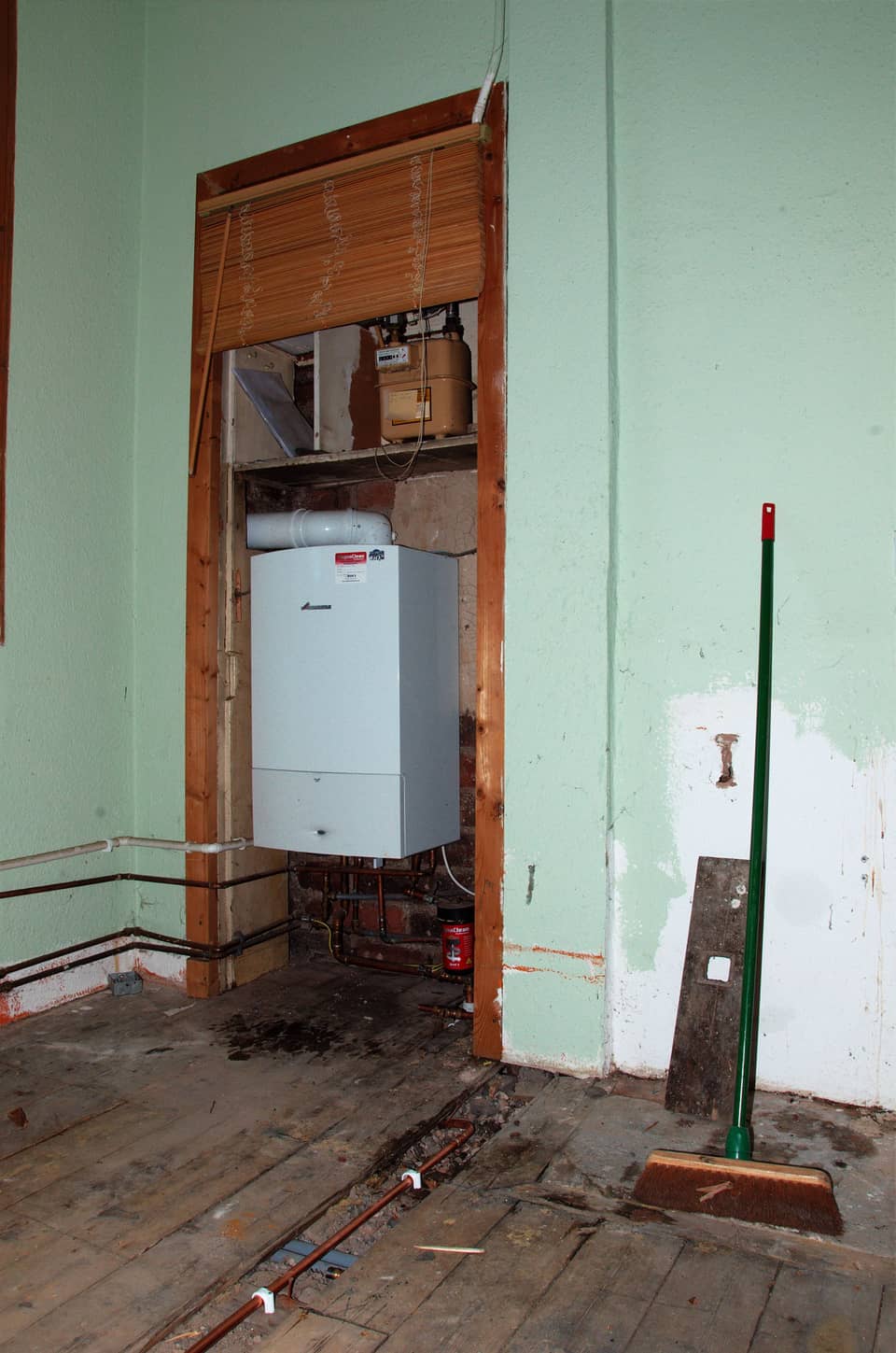
New Kitchen (6130290558) · marsupium photography · CC BY-SA 2.0
Heat · the heating
A new oil or gas boiler
A new boiler makes the same heat from less fuel. It does nothing about the heat the house is losing, and there is no grant for one.
No grant. The €2,000 scrappage grant is paid only when a heat pump replaces the boiler.
SEAI heat pump systems · read 3 Oct 2026
18.0cfor a unit of heat from an oil boiler. From a heat pump: 9.82cSEAI fuel cost comparison · 1 Jul 2026
Published figure


04Use
A BER is a standard calculation across all four stages. Your bills also depend on how you live. One job makes your own power.
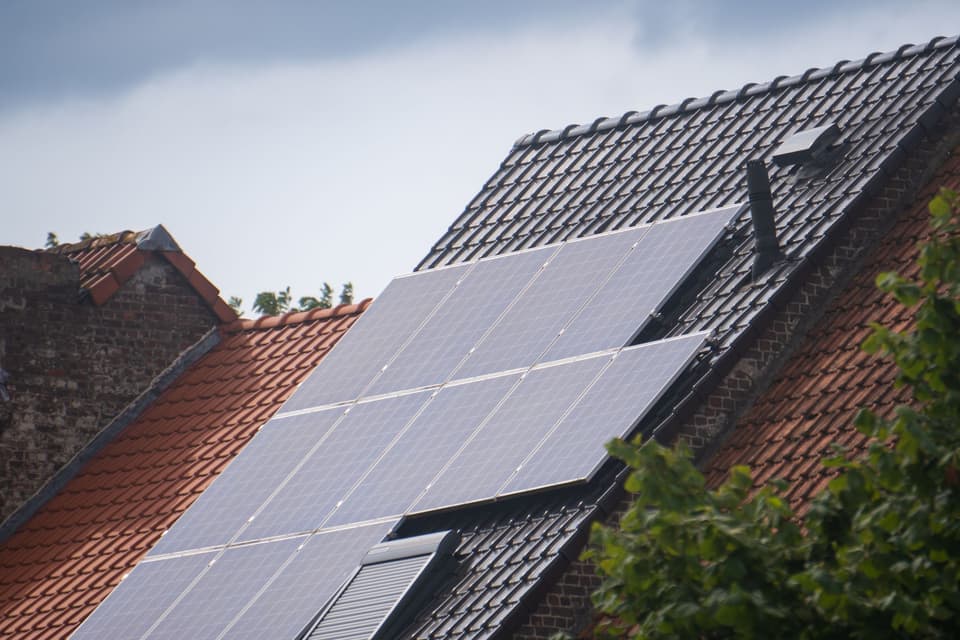
A roof with solar panels on it · Budget Bizar · Pexels License
Use · your power
Solar panels
Solar panels make electricity out of daylight. They work under Irish cloud, just not as hard as they do on a clear day in June.
€1,800 of €9,50019%Grant read 7 Sep 2026 · typical price SEAI H1 2026, semi-detached
60.7points on the BER scale for the typical home: second only to a heat pumpkWh/m²/yr · research lane, BER file 26 Sep 2026
Our model


.jpg)
Grants: SEAI, individual route, read on the dates shown · typical prices: SEAI median costs H1 2026, semi-detached or end-terrace
Only two jobs move a rating a full letter on their own
One letter on the new scale is 50 points. A heat pump moves the typical home 93; solar panels, 60.7. Our model
A heat pump moves a BER nine times as far as new windows
Where the job applies, the median gain is 93 kilowatt-hours per square metre a year for a heat pump, 60.7 for solar panels, 46.7 for wall insulation and 10.4 for new windows. One letter on the new scale is 50.
Each bar is the median improvement to a home's BER from that one job on its own, among homes sold or let where the job applies, worked out on each certificate's own figures. A heat pump moves the rating nearly two letters in the D to F range; attic insulation, draught-stripping and blocking chimneys barely move the rating on their own. The bracket shows one letter's width (50, for D, E and F). The bars are not additive.
EstimateOur model: the research lane's one-job recalculation on each certificate's own figures (BER file of 26 Sep 2026, not the site's 8 Sep file). It matches SEAI’s published heat loss to a median ratio of 1.00 and uses the electricity factor in force on each certificate’s date.
Sources: fixmyber research lane, research/ber/s4_thresholds.py, 26 Sep 2026
The numbers
| Job | Median gain, kWh per m² a year |
|---|---|
| Heat pump | 93 |
| Solar panels | 60.7 |
| Wall insulation | 46.7 |
| New windows | 10.4 |
| Attic insulation | 6.1 |
| Blocking chimneys | 2.4 |
| Draught-stripping | 0.4 |
Three jobs take a typical semi-detached house built 1971–1980 from D to B
Our model's cheapest route, at SEAI's typical prices, with the grants in force today. A group figure, not a quote for your house. Our model
Grants pay €19,500 of a €28,685 job for a 1970s semi-D going from D to B
At SEAI’s median costs the route is €28,685; the grants in force take off €19,500, leaving €9,185, or €11,185 if there’s no fossil boiler to scrap.
The left column stacks the jobs in our model's cheapest route to B for a semi-detached house built 1971–80 and rated D, at SEAI's January to June 2026 median costs: heat pump €16,741, internal walls €9,843, attic €2,101. The middle column is each SEAI grant on the individual route: heat pump €12,500, scrappage €2,000 (hatched: only if an oil, gas or solid-fuel boiler or storage heaters go), walls €3,500, attic €1,500. The right column is what's left to pay at those medians; a real quote will differ.
EstimateThe route is our model (data/transitions.json, /ber/d-to-b/semi-detached-1971-1980); costs are SEAI medians, grants the amounts in force since 29 Sep 2026.
Sources: fixmyber model route, 8 Sep 2026 · SEAI, Median costs of individual energy upgrades, Jan-Jun 2026 (H1 2026), 2026 · SEAI grant pages, transcribed in pipeline/inputs/grants_2026.csv, 3 Oct 2026
The numbers
| Job | Median cost | Grant |
|---|---|---|
| Heat pump | €16,741 | €12,500 |
| boiler scrappage (only if a fossil boiler goes) | — | €2,000 |
| Internal walls | €9,843 | €3,500 |
| Attic | €2,101 | €1,500 |
| Total | €28,685 | €19,500 |
See your grants and what you’d pay
Four questions about your home, then your numbers. Get quotes from registered contractors if you want them.
Updated · grants checked · BER file · prices SEAI H1 2026 · How we know · Corrections